By Mallu Metro Finance Desk | April 9, 2026
As we step into the new financial year (FY 2026-27), significant changes have arrived with the implementation of the Income Tax Act 2025. For the millions of Malayalees living in the UAE, Europe, and beyond, staying updated on these rules isn’t just about compliance—it’s about protecting your hard-earned investments back home in Kerala.
From “smart” new forms to effectively zero tax for many, here is your essential guide to the new Indian tax landscape.
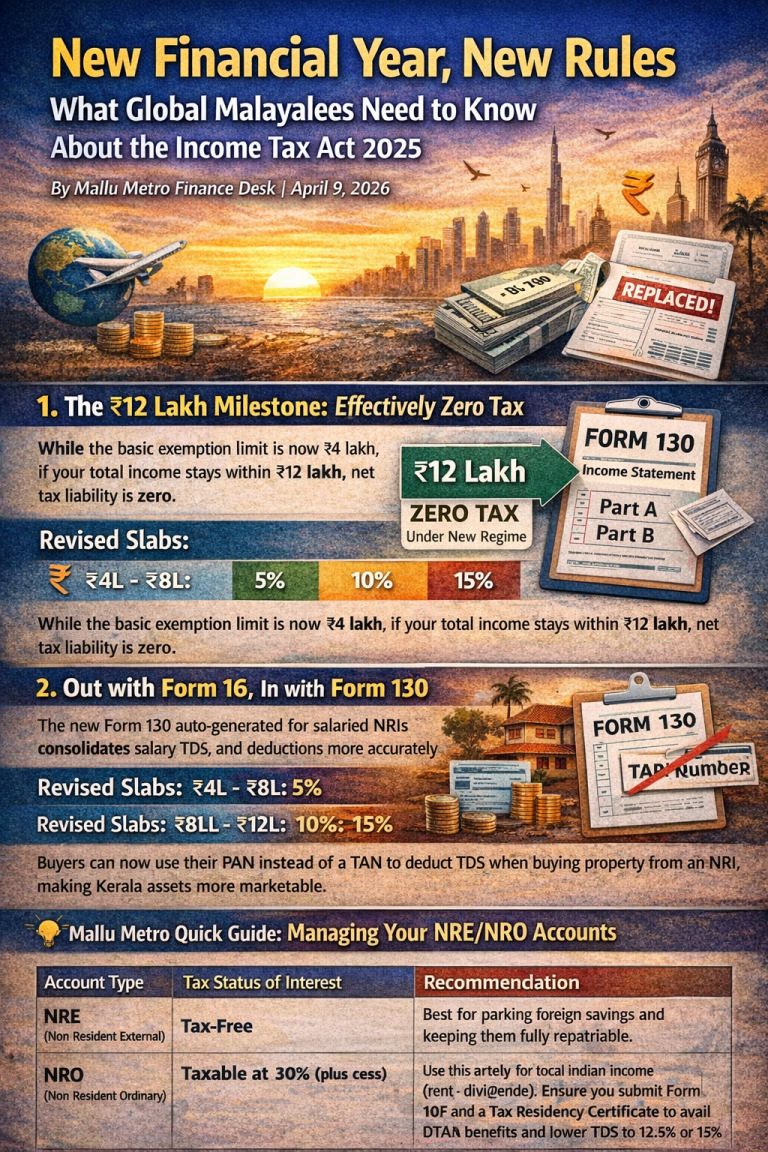
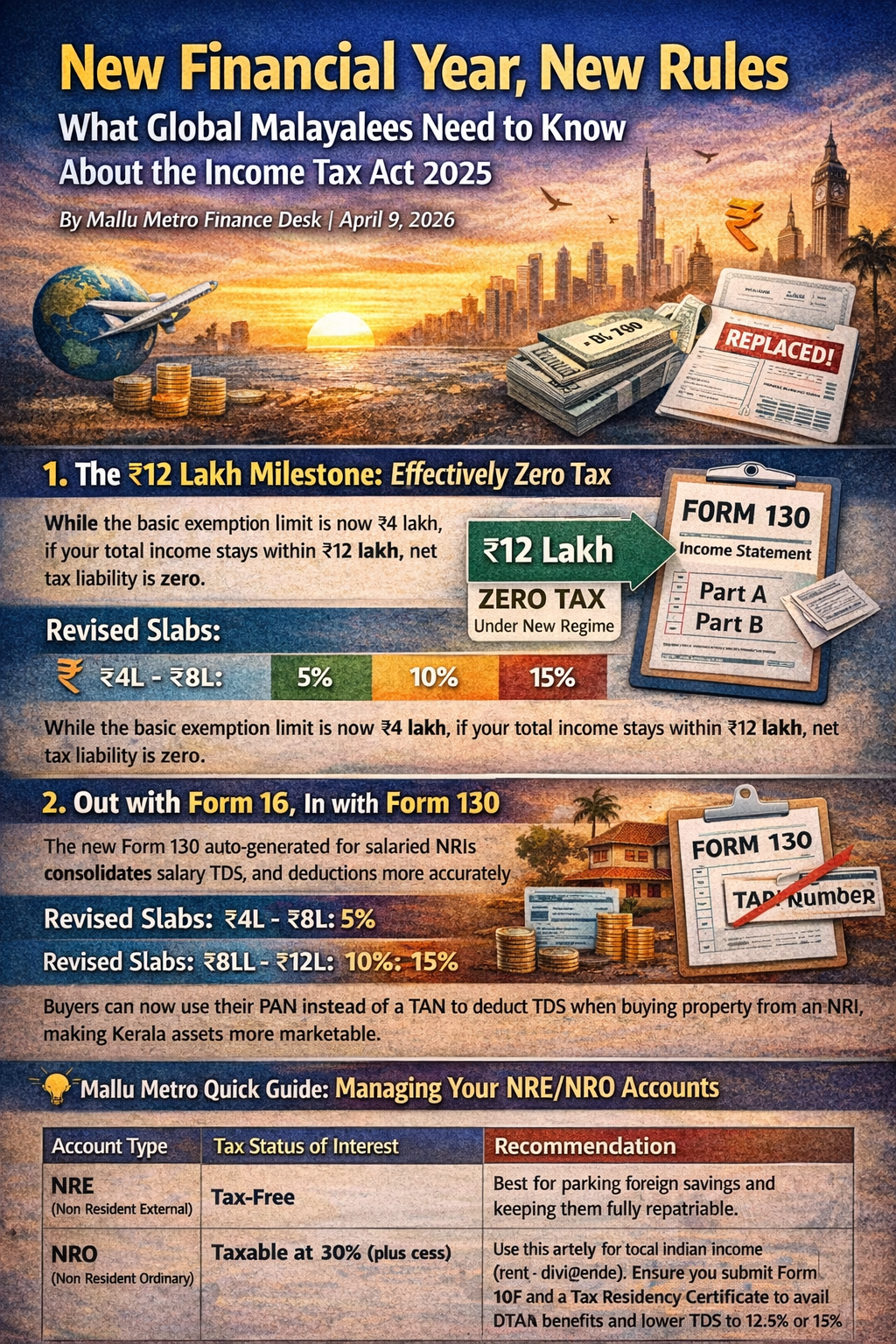
1. The ₹12 Lakh Milestone: Effectively Zero Tax
The biggest headline this year is the massive relief provided under the New Tax Regime, which is now the default for all taxpayers.
- The Zero Tax Threshold: While the basic exemption limit has been raised to ₹4 lakh, the real magic happens with the Section 87A rebate. If your total taxable income in India (from house property, NRO interest, or capital gains) stays within ₹12 lakh, your net tax liability becomes zero.
- Revised Slabs: For those earning above the threshold, the rates remain competitive:
- ₹4L – ₹8L: 5%
- ₹8L – ₹12L: 10%
- ₹12L – ₹16L: 15%
2. Out with Form 16, In with Form 130
If you have a salary in India or work for an Indian entity remotely, say goodbye to the decades-old Form 16. It has been replaced by the more comprehensive Form 130.
- What is Form 130? Unlike Form 16, which was often an internal company document, Form 130 is automatically generated through the government’s TRACES portal.
- Why it matters for NRIs: It includes a three-part structure that consolidates your salary, TDS rates, and tax deductions in one place. It makes it much harder for mismatches to occur between what your employer reports and what you file, reducing the chances of getting a “defective return” notice from the IT department.
3. Property Sales: No More “TAN” Trouble
Selling a flat in Kochi or a plot in Palakkad just got significantly easier.
- The Change: Previously, a resident buyer had to apply for a Tax Deduction and Collection Account Number (TAN) to buy property from an NRI. This often led to delays and complicated paperwork that scared off potential buyers.
- The Relief: Under the new rules, buyers can now use their regular PAN to deduct and pay the TDS when purchasing property from an NRI. This simplifies the transaction and makes your Kerala assets more liquid and attractive to local buyers.
📊 Mallu Metro Quick Guide: Managing Your NRE/NRO Accounts
| Account Type | Tax Status of Interest | Recommendation |
| NRE (Non-Resident External) | Tax-Free | Best for parking foreign savings and keeping them fully repatriable. |
| NRO (Non-Resident Ordinary) | Taxable at 30% (plus cess) | Use this only for local Indian income (rent, dividends). Ensure you submit Form 10F and a Tax Residency Certificate (TRC) to avail DTAA benefits and lower the TDS to 12.5% or 15%. |
💡 Pro-Tip for the Global Mallu
If you have “small” undisclosed foreign assets (up to ₹20 lakh) that you forgot to declare in previous years, the government has introduced a one-time Foreign Asset Disclosure Scheme (FAST-DS 2026). You have a 6-month window to declare these, pay the tax, and avoid any criminal prosecution.
Mallu Metro Advice: Don’t wait until the July filing season. Reach out to your auditor now to see if the new ₹12 lakh rebate applies to your rental income from Kerala!
Suggested Social Media Caption:
💰 NRI Tax Alert! 🇮🇳 The rules for your money in India just changed. From zero tax on income up to ₹12 Lakh to the death of Form 16, here is everything Global Malayalees need to know about the Income Tax Act 2025.
Don’t let your Kerala investments get tangled in red tape. Read our full “Practical News” guide at MalluMetro.com.
#NRIFinance #KeralaNews #MalluMetro #IncomeTax2026 #GulfMalayalee #IndiaTaxUpdate
This video provides a detailed, step-by-step guide for Non-Resident Indians on how to file their income tax returns, making it easier to navigate the complexities of Indian tax laws.