
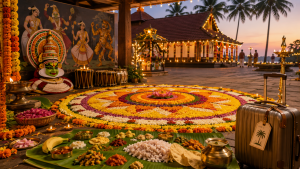
For Malayalis living abroad, Onam has a way of making Kerala feel both close and very far away. This year, Kerala Tourism is planning a week of celebrations designed to showcase the festival not only to Malayalis returning home, but also to visitors discovering Kerala’s traditions for the first time.
Kerala Tourism’s official Tourism Week celebrations are scheduled from August 24 to 30, 2026, with programmes expected to include traditional arts, cultural performances, exhibitions and community events.
The celebrations will highlight familiar parts of Onam such as pookalam and Onasadya, alongside traditional art forms including Kathakali, Mohiniyattam, Pulikali and Thiruvathira.
Why this matters to Malayalis abroad
For many Gulf families, Onam today looks slightly different from the celebrations their parents or grandparents remember.
Children may have grown up almost entirely outside Kerala. Families may include people from different cultures and nationalities. Friends and colleagues may know Onam mainly through pictures of flower carpets, traditional clothing and the Onasadya.
That makes the festival an opportunity to explain why these traditions matter, rather than treating Onam simply as another annual event.
For families travelling home during the period, Kerala’s public celebrations can also add something different to the usual round of family visits.
A child who has celebrated Onam mainly through school programmes in Dubai, Abu Dhabi, Doha or Muscat may experience Pulikali, traditional performances or large public pookalams very differently when seeing them in Kerala.
Travelling to Kerala for Onam?
If you are planning a trip around the celebrations, avoid building your itinerary entirely around early announcements.
Venues, programme timings and individual events can change, so check the latest official Kerala Tourism information closer to your travel date.
It may also be worth looking beyond the main Tourism Week programme. Different districts and communities often have their own cultural events during the wider festival period.
And what about Onam in the Gulf?
For many expatriates, travelling to Kerala for Onam is simply not practical.
That does not mean missing the festival.
Malayali associations, schools, workplaces and community groups across the Gulf traditionally organise celebrations around Onam, often scheduling larger programmes on nearby weekends so more families can attend.
MalluMetro will treat individual community announcements separately and verify details such as venue, date, organiser and entry conditions before publishing them.
That is particularly important because social-media posters can circulate long after programmes have changed or been cancelled.
MalluMetro Take
Perhaps the most interesting part of Onam outside Kerala is how the festival changes without completely losing its identity.
A child growing up in the Gulf may experience Onam differently from someone growing up in Thrissur, Kochi or Thiruvananthapuram — and that is not necessarily a bad thing.
The opportunity is to help the next generation understand why the flower carpet is made, why families sit together for the sadya and what the traditional performances represent, while also making friends from other cultures feel welcome to participate.
Onam has travelled wherever Malayalis have travelled. Keeping the traditions meaningful may matter more than recreating them exactly as they were decades ago.