

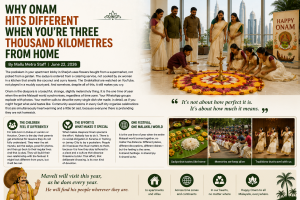
The pookalam in your apartment lobby in Sharjah uses flowers bought from a supermarket, not picked from a garden. The sadya is ordered from a catering service, not cooked by six women in a kitchen that smells like coconut and curry leaves. The Onakkalikal are watched on YouTube, not played in a muddy courtyard. And somehow, despite all of this, it still makes you cry.
Onam in the diaspora is a beautiful, strange, slightly melancholy thing. It is the one time of year when the entire Malayali world synchronises, regardless of time zone. Your WhatsApp groups explode with photos. Your mother calls to describe every single dish she made, in detail, as if you might forget what avial tastes like. Community associations in every Gulf city organise celebrations that are simultaneously heartwarming and a little bit sad, because everyone there is pretending they are not homesick.
The children feel it differently. For kids born in Dubai or London or Houston, Onam is the day their parents get emotional for reasons they do not fully understand. They wear the set mundu, eat the sadya, pose for photos, and then go back to their regular lives. And that is okay. They will build their own relationship with the festival. It might look different from yours, but it will be real.
What makes diaspora Onam special is the effort. Nobody has to do it. There is no social obligation in Karama or Tooting or Jersey City to lay a pookalam. People do it because the ritual matters to them, because it is how they stay tethered to a place and a culture that distance threatens to blur. That effort, that deliberate choosing, is its own kind of devotion.
Maveli will visit this year, as he does every year. He will find his people wherever they are.