
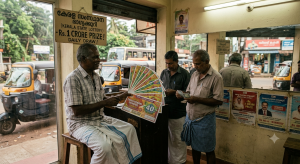
Every day, across tea shops and bus stands and small-town news agents, millions of Kerala residents buy lottery tickets priced at Rs 40-50 and dream of the Rs 1 crore first prize. After a 30% tax deduction, the winner takes home roughly Rs 70 lakh, which in Kerala is enough to buy a house, pay off debts, and change a family’s trajectory permanently.
Kerala’s government lottery is one of the oldest and most successful in India. It is also one of the state’s most significant revenue sources, generating thousands of crores annually that fund welfare programmes, healthcare, and education. When you hear about a new government scheme, there is a reasonable chance it is partially funded by lottery revenue.
For the diaspora, the lottery occupies a strange place. Many NRIs buy tickets through family members back home, maintaining a ritual connection to Kerala’s daily rhythm. The WhatsApp message from your brother saying “checked the number, no luck today” is a tiny, routine heartbreak that keeps you tethered to home.
The math nobody talks about: The odds of winning the first prize in a Kerala state lottery are approximately 1 in 90 lakh. That makes the expected value of a Rs 50 ticket roughly Rs 7-8 in prize money. Statistically, you lose money every time you buy a ticket. But statistics have never been the point. The point is the dream, the moment between buying the ticket and checking the result where anything is possible.
The social impact: The lottery system provides livelihood to an estimated 200,000 sellers across Kerala. These are among the state’s most economically vulnerable workers, earning a commission of Rs 5-6 per ticket. Any disruption to the lottery system would affect their families directly.
Kerala’s lottery is gambling, welfare funding, employment programme, and cultural ritual all at once. It is uniquely Kerala: a system that is simultaneously rational and romantic, fiscal and emotional, pragmatic and dreaming.