
Every monsoon, the same cycle repeats. Rain arrives, mosquitoes multiply, dengue cases spike, and everyone acts surprised. It does not have to be this way.
Kerala’s monsoon health risks are predictable and largely preventable. Here is a practical checklist, whether you live in Kerala full-time or are an NRI visiting during the rainy season.
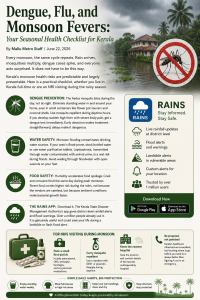
Dengue prevention: The Aedes mosquito bites during the day, not at night. Eliminate standing water in and around your home, even in small containers like flower pot saucers and coconut shells. Use mosquito repellent during daytime hours. If you develop sudden high fever with severe body pain, get a dengue test immediately. Early detection makes treatment straightforward; delays make it dangerous.
Water safety: Monsoon flooding contaminates drinking water sources. If your area is flood-prone, stock bottled water or use water purification tablets. Leptospirosis, transmitted through water contaminated with animal urine, is a real risk during floods. Avoid wading through floodwater with open wounds on your feet.
Food safety: Humidity accelerates food spoilage. Cook and consume food the same day during peak monsoon. Street food carries higher risk during the rains, not because the vendors are careless, but because ambient conditions make bacterial growth faster.
The RAINS app: Download it. The Kerala State Disaster Management Authority’s app gives district-level rainfall alerts and flood warnings. Over a million people already use it. It is genuinely useful and could save your life during a landslide or flash flood alert.
For NRIs visiting during monsoon: Pack a small first-aid kit, carry mosquito repellent, and know the nearest hospital to wherever you are staying. Kerala’s healthcare infrastructure is excellent, but knowing where to go before you need to is always better than figuring it out in an emergency.