
The numbers are getting worse, not better. Kerala has recorded 133 confirmed Shigella cases and five deaths in June alone, bringing the 2026 total to 209 cases. Health officials are urging strict hygiene measures as the monsoon creates conditions that favour the spread of this highly contagious bacterial infection.
This is not a new disease. Shigella outbreaks occur periodically in Kerala during monsoon season, driven by contaminated water and food. What makes 2026 concerning is the pace: 133 cases in a single month suggests either wider contamination of water sources or a more virulent strain circulating.
Where the cases are concentrated: Multiple districts are affected, with clusters reported in areas where drinking water infrastructure is vulnerable to monsoon flooding. The health department has deployed rapid response teams to affected panchayats.
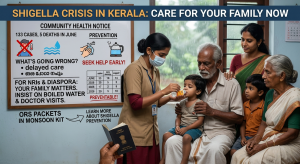
Why the deaths are preventable: Shigella is treatable with antibiotics and supportive care. The five deaths likely involved delayed medical attention, underlying health conditions, or both. The message from health authorities is consistent: seek medical help at the first sign of symptoms, which include bloody or watery diarrhoea, fever, abdominal cramps, and dehydration.
For the diaspora with family in Kerala: Check in with your family. Make sure they are drinking boiled or purified water, especially in rural areas. If elderly family members or young children develop diarrhoea during monsoon season, insist they see a doctor rather than waiting it out. ORS packets should be in every household’s monsoon kit.
Kerala’s health surveillance system is catching and reporting these cases, which is a strength. But catching them is not enough. Preventing them requires investments in water treatment infrastructure that outlast the news cycle.