
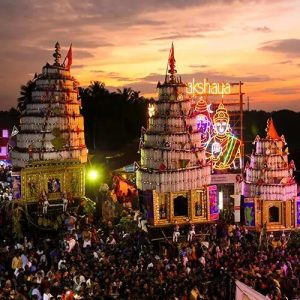
Palakkad’s historic Kalpathi Ratholsavam reaches its main chariot-procession days this weekend, with the three principal rath processions scheduled for 14, 15 and 16 November 2026.
The annual festival at Sree Visalakshi Sametha Sree Viswanathaswamy Temple in Kalpathi began on 8 November and continues until 17 November, combining temple rituals, Vedic chanting, Carnatic music and the celebrated chariot processions through the heritage neighbourhood.
When are the main chariot processions?
The official 2026 programme lists:
14 November — Onnaam Theru
Thirukalyaanam, or the divine wedding ceremony, is held in the morning, followed by the first chariot procession at 4:00 PM.
15 November — Rendaam Theru
The second chariot procession begins at 4:00 PM.
16 November — Moonaam Theru
The third chariot procession begins at 4:00 PM, culminating in the Ratha Sangamam, when the festival chariots converge.
The three days from 14 to 16 November are the main public chariot-festival dates listed by Incredible India.
The festival is longer than the three procession days
Visitors should not confuse the Ratholsavam’s main chariot dates with the full festival period.
The 2026 celebrations began with Dhwajaarohanam, or flag hoisting, on 8 November.
The programme also includes Anjaam Thirunaal and Pallakku-Ratha Sangamam on 12 November, followed by the three major chariot days.
The festival formally concludes on 17 November with Dhwaja Avarohanam, the lowering of the ceremonial flag, and Palika Visarjanam.
Why is Kalpathi Ratholsavam special?
Kalpathi Ratholsavam is one of Kerala’s best-known temple chariot festivals.
The celebration is centred around the historic Sree Viswanatha Swamy Temple and the traditional Kalpathi agraharam neighbourhood in Palakkad.
During the main procession days, large decorated temple chariots are drawn through the narrow streets by devotees, creating the visual spectacle for which the festival is best known.
The wider programme also includes Vedic chanting, devotional ceremonies and classical music performances, including the Carnatic traditions closely associated with Kalpathi.
Expect large crowds
The festival attracts large numbers of devotees and visitors.
Incredible India says more than 200,000 participants attend the festival each year.
For visitors, that means the procession area can become extremely busy, particularly during the later afternoon and evening on the main chariot days.
Families travelling with elderly people or young children should allow extra time and avoid depending on last-minute access close to the temple streets.
What should visitors check before travelling?
Because access arrangements can change during major festival days, travellers should check the latest local information before setting out.
In particular, confirm:
- road diversions;
- vehicle-access restrictions;
- parking arrangements;
- procession timings;
- local bus or taxi drop-off points; and
- any crowd-control instructions.
As of 13 November, I could verify the official festival programme but did not find a current official public notice giving a complete 2026 road-diversion map.
So it would be better not to publish guessed road closures or parking locations.
Check Palakkad Police, district administration and local tourism channels on the day of travel.
Travelling from the Gulf?
For Gulf Malayalis planning a Kerala trip specifically around Ratholsavam, the most important point is timing.
The main chariot events are on 14, 15 and 16 November, with the processions scheduled from 4 PM, but reaching Palakkad shortly before that may not be practical because of crowds and traffic restrictions.
Allow additional time for:
airport arrival, onward road or rail travel, hotel check-in and local access to Kalpathi.
Do not assume that normal travel times will apply on the main festival days.
Where should visitors stay?
Palakkad town is the practical base for most visitors.
Accommodation availability can tighten during major festival dates, so anyone travelling specifically for the 14–16 November processions should avoid depending on last-minute hotel availability.
Visitors staying outside central Palakkad should also factor in possible traffic diversions when planning their return journey after the procession.
What happens on 16 November?
The third procession day is particularly significant because it culminates in the Ratha Sangamam.
This is when the decorated chariots come together, creating one of the defining moments of Kalpathi Ratholsavam.
Visitors interested mainly in seeing the festival’s grandest chariot spectacle may therefore consider 16 November, while remembering that it is also likely to be among the busiest periods.
And on 17 November?
The festival does not end immediately after the Ratha Sangamam.
The official programme continues into 17 November, when the ceremonial flag is lowered and the concluding rituals are performed.
That makes 17 November useful for visitors interested in the religious conclusion of the festival rather than only the main public processions.
MalluMetro Take
For Gulf Malayalis visiting Kerala this week, Kalpathi Ratholsavam is one of the major cultural events worth knowing about — especially for families with roots in Palakkad or travellers already planning to be in northern Kerala.
The practical dates are:
14 November — first chariot procession, 4 PM
15 November — second procession, 4 PM
16 November — third procession and Ratha Sangamam, from 4 PM
17 November — concluding ceremonies
The most important travel advice is simple:
arrive early, expect crowds, and check local traffic arrangements before heading into Kalpathi.
The main chariot dates are only part of the wider festival, which runs from 8 to 17 November 2026.
Verified sources: Palakkad Tourism 2026 festival programme; Incredible India / Ministry of Tourism. Status reviewed 13 November 2026.